
Detection & response
Managed security services.
Engineered around you.
Security tools need an operating plan. We help connect visibility, detection, investigation, and response so your team can understand what matters and act on it. The service scope is defined around your environment and internal capabilities.
What we help with
A defined scope.
A useful outcome.
Bring monitoring, threat investigation, and response workflows together to strengthen your ongoing security operations.
- Security monitoring and alert triage
- Threat investigation and response coordination
- Detection tuning and response workflow improvement
- Operational reporting and ongoing review
Where engagements usually start
Someone watching the platform
after the project ends.
Managed security keeps the tools you already own tuned, monitored, and current, with a named engineer who knows the environment rather than a queue that does not.
Platform administration
Policy hygiene, object cleanup, software currency, certificate management, and configuration backups handled on a schedule and reported monthly.
Monitoring and alert triage
Alerts from firewalls, Cortex, and cloud tools reviewed by engineers who tune the noise down and escalate what matters, with runbooks written for your team.
Threat investigation and response support
When something is real, engineers who can act on the platform immediately: block, isolate, adjust policy, and document the change.
Continuous improvement
Quarterly reviews of what the platform is doing versus what it could do, with a prioritized list of improvements and the engineering time to deliver them.
What we manage
The Palo Alto Networks
platforms you already own.
Managed security from Rhenium is built around the tools in your environment, not a stack we resell. These are the platforms our engineers administer and monitor most often.
Firewalls and Panorama
Next-generation firewalls and Panorama: rule-base hygiene, PAN-OS currency, content updates, HA checks, and configuration backups on a schedule.
Remote access and SASE
Prisma Access and GlobalProtect: user experience issues, certificate renewals, and policy kept in line with the on-premises firewalls.
Endpoint and detection
Cortex XDR and Cortex XSIAM: agent health, exclusions, detection tuning, and alert review so analysts see fewer, better alerts.
Automation
Cortex XSOAR playbooks and integrations kept working as the tools they connect to change versions and APIs.
Cloud posture
Cortex Cloud findings worked down by priority, with fixes routed to the cloud teams that own each account.
External exposure
Cortex Xpanse exposures attributed, assigned, and verified closed from the outside.
How it runs
From onboarding
to a steady monthly rhythm.
Baseline
We review the current configuration, alert volume, and open issues, usually through a Firewall Health Check, so the service starts from evidence.
Agree the model
Coverage, escalation contacts, change approval, and who does what between our engineers and your team, written down before the service starts.
Operate
Scheduled administration, alert triage, and approved changes, each logged with what was done and why.
Report and improve
A monthly report on platform health and activity, and a quarterly review that turns what we saw into the next round of improvements.
Where the work begins
Start with the
right questions.
The environment and the business context determine the right next step. These questions help shape the engagement.
- Which platforms and telemetry sources are in scope?
- How does your team investigate and escalate an alert today?
- What coverage and response responsibilities need to be agreed?
Our platform specialty
Palo Alto Networks
engineering depth.
Bring the right technical expertise to the platforms already supporting your environment.
Who delivers the work
U.S.-based engineers.
Clear responsibilities.
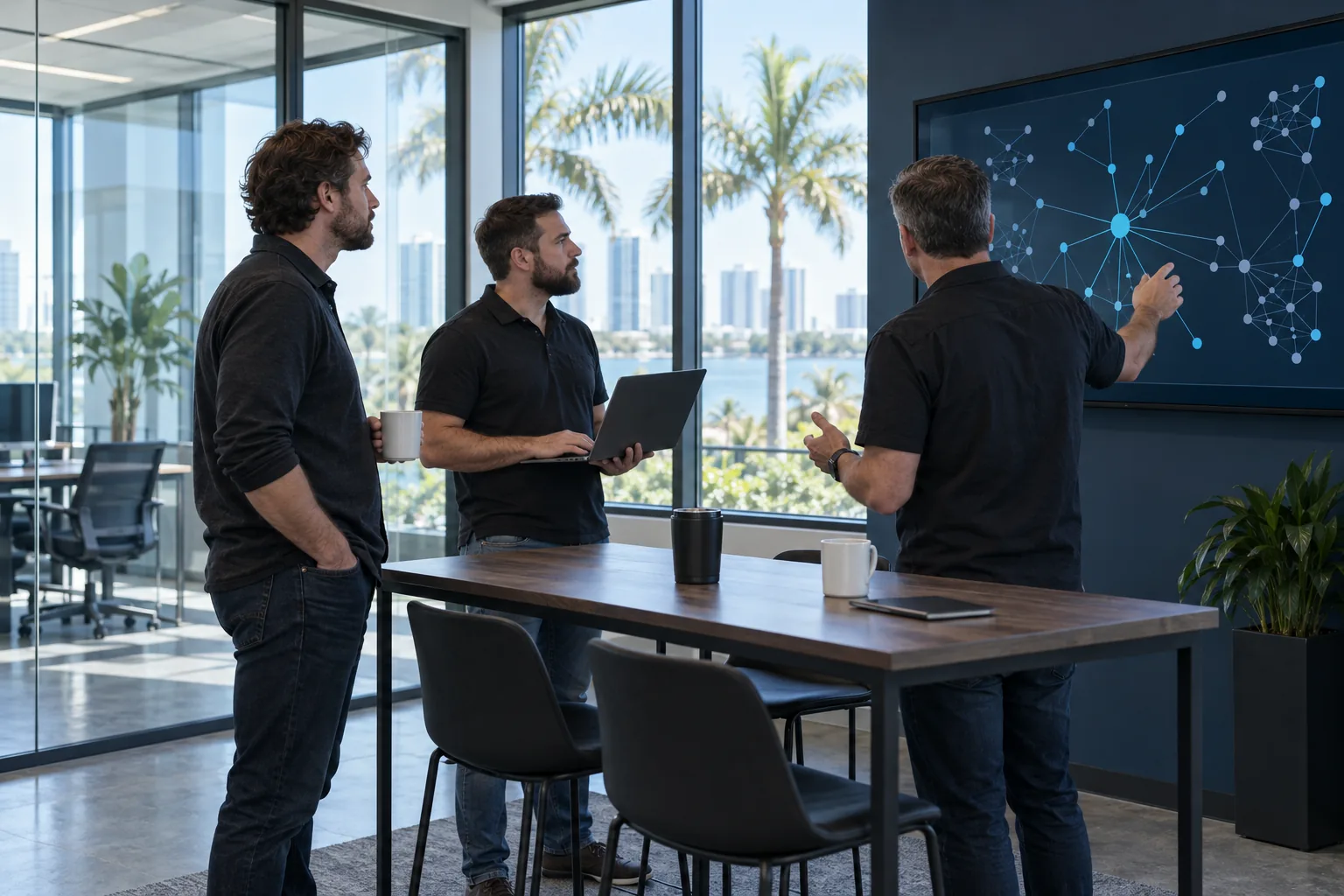
Your engineering work is handled by a team based entirely in the United States. We define the scope, technical responsibilities, and handoff around the needs of your internal team.
Engagements are architect-designed and engineer-delivered, with a written scope, defined change windows, and documentation your team can operate after handoff.
Get to know RheniumQuestions
Managed security questions.
What does a managed security service from Rhenium include?
Scheduled administration of your Palo Alto Networks platforms, alert triage and tuning, investigation support when something is real, a monthly report, and a quarterly improvement review. The exact scope is written down for each engagement.
Is this a replacement for our internal security team?
Usually not. Most customers keep their own team and use us for the platform depth and routine work they do not have time for. Responsibilities between the two teams are agreed in writing before the service starts.
What coverage hours do you provide?
Coverage and response responsibilities are agreed per engagement and written into the scope, based on your environment and what your internal team already covers.
Do we keep ownership of our platforms and configuration?
Yes. The platforms, licenses, and configuration stay yours. Changes go through the approval process agreed at onboarding, and everything we change is documented.
How does a managed security engagement start?
Most start with a Firewall Health Check or a similar review, so the service begins from a known baseline. From there we agree the scope and the tier of monthly engineering capacity.
Is Rhenium Security a Palo Alto Networks partner?
No. Rhenium Security is an independent engineering firm. Our engineers specialize in Palo Alto Networks platforms, and we are not affiliated with, sponsored by, or endorsed by Palo Alto Networks.
Move forward with confidence
Make the next step
a well-defined one.
Understand the environment, agree on the scope, and put the right engineering expertise behind the work.